
When to Use Humidity Control Packaging Bags
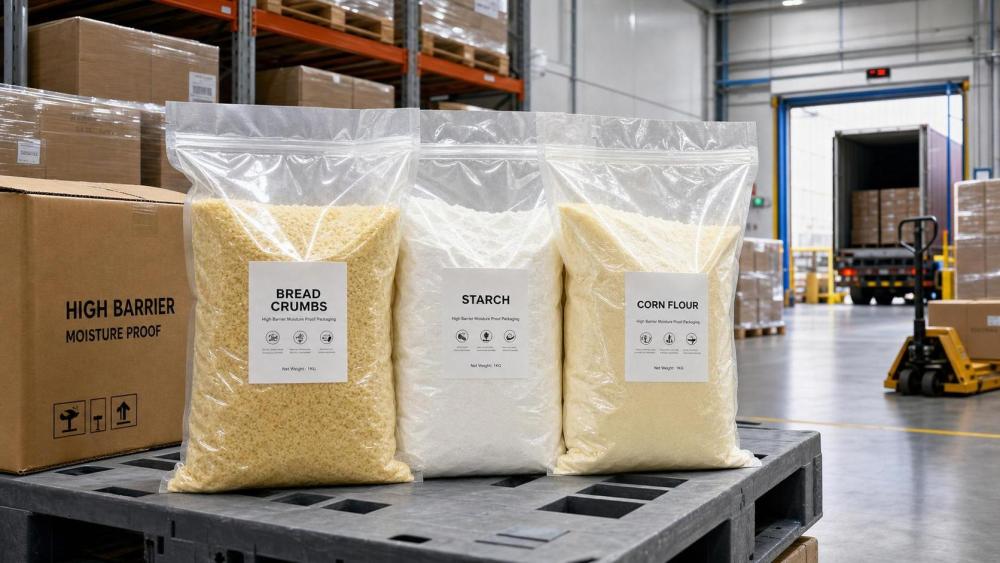
Humidity control packaging bags are not just a packaging upgrade.
They are a process protection tool for dry ingredients and sensitive food systems.
In food coating, milling, and export operations, moisture exposure creates expensive problems very quickly.
Clumping, caking, texture loss, poor flow, and reduced shelf stability often begin with weak humidity control.
That is why humidity control packaging bags matter most before visible damage appears.
They help protect breadcrumbs, Japanese Panko, modified starches, cornmeal, refined flours, seasoning blends, and dry premixes.
They also support smoother handling on filling lines, in warehouses, and during global shipping.
For practical teams, the key question is simple.
When should humidity control packaging bags become standard, not optional?
Why moisture becomes a production risk faster than expected
Dry ingredients are rarely as stable as they look in storage.
Many materials absorb moisture from the air long before operators notice a visual change.
This is especially true for fine powders, porous crumbs, and starch-based coating systems.
Once moisture enters the pack, flowability can drop and particle behavior starts to shift.
In practice, that affects dosing accuracy, breading pickup, adhesion, and product consistency.
For milled grains, excess humidity can also influence particle separation and handling efficiency.
For coating blends, it may reduce crispness performance after frying or air-frying.
Humidity control packaging bags reduce these risks by limiting moisture transfer during storage and movement.
This also means fewer line interruptions and less product rejection.
Use humidity control packaging bags when ingredients are hygroscopic
The clearest signal is ingredient behavior.
If the product naturally attracts moisture, humidity control packaging bags should be considered early.
Hygroscopic materials are common across food coating and milling supply chains.
- Modified starches that must stay free-flowing and stable.
- Fine breading blends that cake under humid conditions.
- Seasoning premixes with salts, sugars, or functional powders.
- Cornmeal and flours that lose handling consistency after moisture pickup.
- Panko or needle-shaped breadcrumbs that need dry structure and light texture.
If your material bridges in hoppers, sticks inside feeders, or packs hard in bags, humidity is often involved.
At that point, humidity control packaging bags help protect both product performance and handling reliability.
Use them when product texture must remain exact
Texture-sensitive products need tighter packaging control than many teams expect.
This is especially important for breadcrumb systems used to create crisp, light, and consistent coatings.
If crumbs absorb humidity, they may soften, compact, or break more easily during transport.
That can change pickup rate, visual appearance, and final eating quality.
Japanese Panko is a strong example because its open structure supports airy crispiness.
When moisture gets in, that structure becomes harder to preserve.
Humidity control packaging bags help keep the physical texture closer to production target.
That matters for suppliers serving frozen foods, QSR systems, and export customers with strict texture expectations.
Use humidity control packaging bags for long storage or export routes
Storage time changes the packaging decision.
A product that performs well for one week may fail after six weeks in a humid warehouse.
The same is true for ocean freight, cross-border trucking, and mixed-climate distribution.
Temperature changes often drive condensation risk inside or around packaged goods.
That is where humidity control packaging bags become a practical shipping safeguard.
They are particularly useful when products move through ports, tropical regions, or seasonal humidity swings.
In actual operations, packaging failure often appears after arrival, not at dispatch.
So the better decision is to protect the product based on route risk, not only plant conditions.
- Long warehouse dwell time.
- Container shipping with variable climates.
- Export to regions with high ambient humidity.
- Products stored after opening in production areas.
Use them when line efficiency depends on smooth powder flow
Packaging is closely tied to equipment performance.
If dry ingredients feed poorly, the issue is not always machine setup.
Sometimes the root cause is humidity absorbed before the product reaches the line.
Humidity control packaging bags help preserve stable bulk behavior for filling, dosing, and transfer.
That matters in VFFS systems, batching operations, and automated coating lines.
For batter and breading systems, poor flow can lead to uneven application and excess waste.
For milling outputs, poor flow can slow repacking or create weight variation.
If operators already fight caking or inconsistent discharge, humidity control packaging bags are worth evaluating immediately.
How to decide if humidity control packaging bags are necessary
A simple decision framework helps avoid guesswork.
Start with the product, then review the route, storage, and process exposure points.
- Check whether the ingredient gains moisture quickly.
- Review shelf-life complaints, caking records, or flow issues.
- Map climate exposure during warehousing and transport.
- Look at how often opened bags remain on the floor.
- Confirm whether texture or particle structure is commercially critical.
- Compare packaging cost against rejection, waste, and customer risk.
If several of these points are true, humidity control packaging bags are usually justified.
From a cost perspective, prevention is often cheaper than rework, returns, or texture claims.
What to pair with humidity control packaging bags
The bag alone does not solve every moisture issue.
Results improve when humidity control packaging bags are part of a wider protection setup.
- Use high-barrier films when moisture transmission risk is high.
- Apply nitrogen flushing where oxidation and moisture both matter.
- Improve warehouse humidity monitoring and rotation discipline.
- Reduce bag-open time near coating or batching lines.
- Match pack size to actual production consumption speed.
This more complete approach supports quality stability from production to final use.
It also aligns well with food safety, consistency, and supplier credibility goals.
Common signs your current packaging is not enough
In many plants, the warning signs are already visible.
They are just treated as handling issues instead of packaging issues.
- Powders form lumps before the stated shelf-life ends.
- Breadcrumbs lose lightness after shipment.
- Operators need manual bag shaking to restore flow.
- Weight accuracy drifts because material discharge is inconsistent.
- Customers report texture variation between batches or deliveries.
If these patterns keep returning, humidity control packaging bags should move higher on the improvement list.
They are often one of the most practical ways to reduce recurring moisture-related instability.
Final takeaway for daily operations
Use humidity control packaging bags when product dryness directly affects quality, flow, texture, or shelf life.
Use them earlier when ingredients are hygroscopic, routes are long, or climate exposure is hard to control.
For food coating systems, milled grains, starches, and dry mixes, the packaging choice influences more than storage.
It affects process stability, customer confidence, and product performance at the point of use.
A good next step is to review one high-risk product and one high-risk route.
If moisture risk appears in both places, humidity control packaging bags are likely the right operational move.
- food coating systems
- Japanese Panko
- breadcrumbs
- breading blends
- modified starches
- cornmeal
- coating lines
- nitrogen flushing
- batter and breading systems
- breadcrumb systems
- coating blends
- automated coating lines
- humidity control packaging
- coating systems
- needle-shaped breadcrumbs
- humidity control packaging bags
Related News
- Is Nitrogen Flushing Necessary for Shipping Dry Coating Ingredients?Sep 09, 2026Is nitrogen flushing necessary for dry coating ingredient shipping? Learn when it protects flavor and shelf life—and when moisture barriers matter more.
- Gas Flushing MAP for Fresh Foods: How to Set Gas Ratios and Protect Seal QualitySep 04, 2026Gas flushing MAP for fresh foods: learn how to set practical CO2, N2, and O2 ratios, reduce residual oxygen, verify seal integrity, and protect shelf life with reliable packaging controls.
- What Is Gas-Flushing MAP Packaging and How Does It Extend Shelf Life?Sep 03, 2026Gasflushing MAP packaging reduces oxygen, protects fragile dry foods, and supports longer shelf life. Learn how nitrogen flushing, barrier films, and seal quality preserve freshness.
- When Does Nitrogen Flushing for Dry Foods Improve Shelf Life and Product Quality?Aug 10, 2026Nitrogen flushing for dry foods improves shelf life when oxygen is the real risk. Learn when it protects flavor, texture, and quality—and when barrier film and seals matter more.