
Why does MAP packaging matter for shelf life extension?
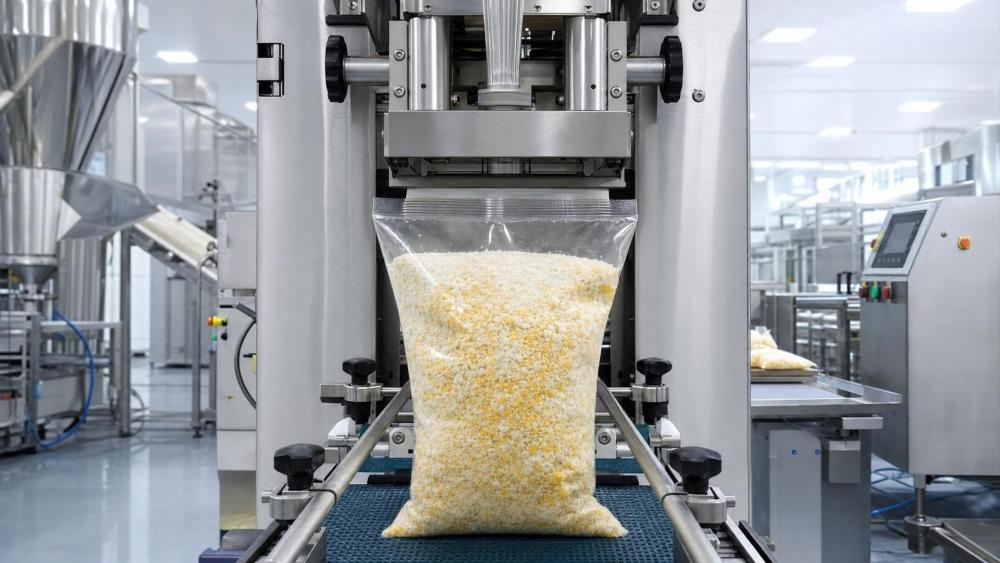
Shelf life extension is rarely just a date on a label. It affects texture, safety margins, export stability, and the cost of rejected or returned goods.
That is why MAP packaging draws so much attention in food processing. It changes the gas environment inside the pack to slow quality loss.
For dry coatings, breadcrumbs, cornmeal, starch blends, and bakery ingredients, the main threat is often moisture uptake rather than microbial spoilage alone.
When moisture enters the pack, flowability drops, crispness weakens, clumping increases, and application performance becomes less predictable on processing lines.
MAP packaging supports shelf life extension by reducing oxygen exposure and limiting the conditions that speed up oxidation, flavor fade, and texture change.
In practical terms, shelf life extension means protecting commercial value. A coating system that performs well after shipping is more useful than one that tests well only at release.
Across food coating and milling sectors, packaging has become part of process control. It now sits alongside particle size, starch behavior, and inspection standards.
That broader view is central to GFCMS coverage, where ingredients, machinery, inspection, and moisture-proof packaging are treated as one connected performance system.
So what exactly does MAP packaging do inside the pack?
A common question is whether MAP packaging simply removes air. The better answer is that it replaces uncontrolled air with a managed atmosphere.
Most shelf life extension programs use nitrogen flushing, low-oxygen conditions, or a gas mix matched to the product’s sensitivity and pack format.
For dry food ingredients, nitrogen is often preferred because it is inert and helps displace oxygen without reacting with the product.
Still, MAP packaging does not work alone. Barrier film quality, seal integrity, residual oxygen level, and moisture transmission rate all shape the final result.
This is where many shelf life extension assumptions go wrong. A good gas flush cannot rescue weak film structure or unstable sealing performance.
In actual production, the packaging line also matters. VFFS settings, fill temperature, dust management, and product bulk density can all influence pack protection.
That matters for products like Japanese Panko, breading blends, and refined flours, where low compression and texture preservation are commercially important.
A quick way to judge MAP packaging value
When comparing packaging options for shelf life extension, these checkpoints usually reveal whether MAP packaging is genuinely useful or only technically attractive.
Which products usually benefit most from shelf life extension through MAP?
Not every food product gains the same value from MAP packaging. The strongest fit is often found where texture, dryness, and oxidation control directly affect use performance.
Dry breading systems are a strong example. If a breadcrumb loses structure or absorbs ambient moisture, final frying results can drift quickly.
The same logic applies to Panko, air-fryer coatings, batter premixes, modified starch blends, cornmeal, and milled grain ingredients stored across mixed climates.
Shelf life extension is also highly relevant for export packaging. Products may leave one humidity profile and arrive in another after weeks of handling.
In those cases, MAP packaging supports more than product appearance. It helps preserve adhesion, flow, dust control, and repeatable application on automated lines.
Inspection and packaging strategy often overlap here. Clean product from sorting and X-ray control still needs stable packaging to hold value through the full chain.
That is why shelf life extension conversations increasingly include milling consistency, moisture management, and contamination control rather than packaging alone.
Is MAP packaging always better than ordinary protective packaging?
Not always. MAP packaging is effective when the failure mode matches what atmosphere control can solve.
If the main issue is puncture damage, poor warehouse practice, or unstable raw material moisture, shelf life extension may require upstream correction first.
A useful comparison is this: standard packaging protects the product from outside conditions, while MAP packaging also manages the internal pack environment.
The distinction seems small, but it changes performance expectations. Better internal control often means more predictable shelf life extension during transport and storage.
At the same time, MAP packaging can add material, equipment, validation, and monitoring requirements. That extra complexity needs a measured business case.
More common decision points include:
- Whether product claims depend on crispness, color, or aroma stability.
- Whether distribution includes export, long storage, or variable humidity.
- Whether a rejected batch costs more than the packaging upgrade.
- Whether line controls can maintain reliable gas and seal performance.
In short, MAP packaging is not a universal answer. It is a targeted shelf life extension tool that works best with defined risks and measurable quality goals.
Where do companies misread shelf life extension projects?
One frequent mistake is treating shelf life extension as a packaging-only project. In reality, product formulation, fill conditions, and logistics often shape the result.
For example, modified starch systems, seasoning oils, and particle size distribution can change how a product responds to oxygen or moisture exposure.
Another mistake is relying on lab shelf data without shipping simulation. A pack can pass static storage tests and still fail under vibration or temperature swings.
Some teams also focus on nominal barrier claims while ignoring sealing contamination from fine powders. That issue is especially relevant in milling and coating environments.
A more disciplined approach is to review shelf life extension across four connected layers:
- Product sensitivity: oil, moisture, flavor volatility, and texture targets.
- Pack system: gas mix, film barrier, seal strength, and leak resistance.
- Line reality: dust load, fill speed, residual oxygen control, and inspection checks.
- Distribution stress: storage humidity, export time, and handling variability.
This integrated view aligns closely with the way GFCMS frames food production knowledge, where packaging decisions are linked to process and quality data.
How should shelf life extension be evaluated before rollout?
A practical question is not whether MAP packaging sounds advanced, but whether it improves a specific risk that already costs time, margin, or product stability.
Before rollout, define the real failure point. Is it stale aroma, weak crispness, oxidation, clumping, or shortened export window?
Then compare current packaging against a MAP packaging trial using the same product, same fill conditions, and realistic logistics simulation.
Useful shelf life extension metrics usually include residual oxygen, moisture gain, water activity shift, sensory drift, flowability, and seal survival after handling.
It also helps to set a decision table early, so technical testing stays connected to commercial outcomes.
When those signals are clear, shelf life extension decisions become easier. The discussion shifts from theory to measurable packaging reliability.
What is the sensible next step if MAP packaging is under review?
Start by mapping the product’s actual loss pattern, not just its target shelf life. The first question is what quality attribute fails first.
Next, connect packaging review with ingredient behavior, milling consistency, and inspection records. Shelf life extension works best when those inputs are stable.
Then build a short validation plan around film choice, gas control, sealing conditions, and transport simulation. That usually reveals whether MAP packaging will scale well.
For dry food systems, especially coatings and milled ingredients, shelf life extension is often a quality-protection strategy as much as a storage strategy.
The most reliable decisions come from comparing packaging data with real use performance, including crispness, adhesion, purity, and handling after shipment.
That is also where a technical intelligence source such as GFCMS becomes useful: it helps connect packaging choices with ingredient science, machinery capability, and compliance reality.
When shelf life extension is treated as a cross-functional decision, MAP packaging becomes easier to judge, easier to validate, and more likely to deliver lasting value.
Related News
- Is Nitrogen Flushing Necessary for Shipping Dry Coating Ingredients?Sep 09, 2026Is nitrogen flushing necessary for dry coating ingredient shipping? Learn when it protects flavor and shelf life—and when moisture barriers matter more.
- Gas Flushing MAP for Fresh Foods: How to Set Gas Ratios and Protect Seal QualitySep 04, 2026Gas flushing MAP for fresh foods: learn how to set practical CO2, N2, and O2 ratios, reduce residual oxygen, verify seal integrity, and protect shelf life with reliable packaging controls.
- What Is Gas-Flushing MAP Packaging and How Does It Extend Shelf Life?Sep 03, 2026Gasflushing MAP packaging reduces oxygen, protects fragile dry foods, and supports longer shelf life. Learn how nitrogen flushing, barrier films, and seal quality preserve freshness.
- When Does Nitrogen Flushing for Dry Foods Improve Shelf Life and Product Quality?Aug 10, 2026Nitrogen flushing for dry foods improves shelf life when oxygen is the real risk. Learn when it protects flavor, texture, and quality—and when barrier film and seals matter more.