
Byline: Food Coatings Editorial Desk
Japanese style breadcrumbs are not just a dry coating material. In foodservice kitchens, frozen food plants, QSR supply chains, and seafood processing lines, breadcrumbs help decide how a coated product looks, how it bites, how it survives holding time, and how repeatable the final plate or packaged item feels to the customer. Buyers often start with a simple question about price or color, but the real selection work is more practical: crumb shape, particle distribution, moisture control, oil pickup, adhesion, frying behavior, and pack stability all matter.
This article is written for sourcing teams, product developers, and foodservice operators comparing Japanese style breadcrumbs for fried chicken, shrimp, fish fillets, croquettes, onion rings, and other coated products. It also answers a common storage-intent question seen in multilingual searches, including как хранить панировочные сухари, because storage discipline can protect the value of a good coating as much as the initial formula choice.
Why Japanese Style Breadcrumbs Behave Differently
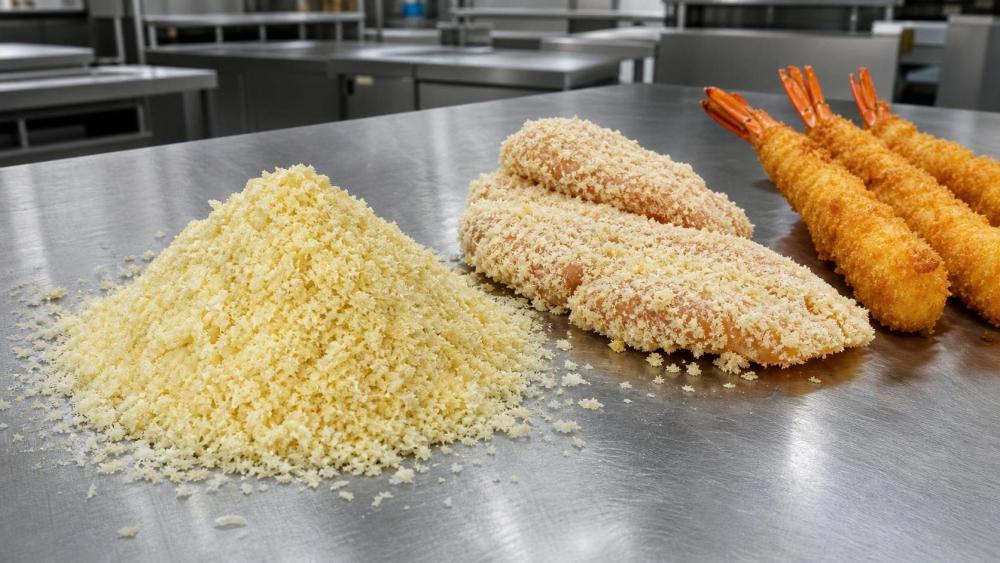
Japanese style breadcrumbs are often chosen for a lighter, more open texture than many traditional fine breadcrumbs. Their flakes can create a crisp, visible surface after frying, especially when the application needs a more premium appearance. The difference is not only visual. Larger, irregular flakes can leave more tiny spaces on the surface of the coated food, which helps create a lighter bite. Fine crumbs, by contrast, may form a denser crust that can be useful for other applications but may not give the same airy texture.
For commercial buyers, the key is not to treat every panko or breadcrumb as interchangeable. A product that works for frozen shrimp may not be ideal for fried chicken strips. A crumb that gives a strong first bite may soften too quickly under a heat lamp. A bright white crumb may suit seafood, while yellow or orange crumbs may support a more seasoned visual profile. The buyer's job is to connect the coating material to the cooking method, final appearance, pack format, and target customer expectation.
When a supplier presents Japanese Needle-Shaped Bread Panko, the technical conversation should move beyond the product name. Ask how the crumb is shaped, how moisture is controlled before packing, what color options are available, how the product performs in breading lines, and how it should be stored after opening. These questions make procurement more concrete and reduce the risk of choosing a visually appealing crumb that is hard to run in production.
Selection Factors Buyers Should Check
A good buying process starts with the food product, not the breadcrumb catalog. Fried chicken, seafood, vegetables, and prepared snacks each place different demands on coating materials. For chicken, buyers often need strong adhesion, good coverage, and a crust that stays crisp through short holding periods. For seafood, a lighter color and cleaner bite may be more important. For frozen coated products, freeze-thaw stability and pack protection become central. For central kitchens, line speed and waste control also matter.
Particle shape is one of the first factors to test. Needle-shaped or flake-like crumbs can create a high-relief surface with more visual texture. That texture can help the product look more generous after frying, but it may also require careful pre-dusting and batter viscosity control. If the batter is too thin, flakes may not adhere evenly. If it is too thick, the final coating may feel heavy. Buyers should test breadcrumbs together with the full coating system, not as a dry sample on a desk.
Color is another practical choice. White breadcrumbs are often used where a clean, light appearance is preferred. Yellow or orange breadcrumbs can support a richer fried color or match a seasoning concept. Color should be tested after frying, baking, or air frying because raw crumb color does not always predict final appearance. Oil type, frying temperature, batter composition, and seasoning blends can all influence the finished result.
Storage and Shelf-Life Discipline
Breadcrumb storage looks simple until a foodservice team begins buying in larger volumes. The query как хранить панировочные сухари translates to a practical concern: how should breadcrumbs be stored so they remain useful? The short operational answer is to keep them dry, closed, clean, and protected from strong odors, humidity, and temperature swings. The longer procurement answer is to ask the supplier about packaging construction, recommended storage conditions, opened-pack handling, and how quickly the product should be used after opening.
Dry coating materials can lose quality when exposed to humid air. They may clump, lose flowability, or pick up off-notes from nearby ingredients. In busy kitchens, opened bags are sometimes folded casually and left near steam, sinks, or warm preparation areas. That practice can damage coating performance. In a processing plant, operators should avoid leaving open containers near washdown zones or high-moisture rooms. In distribution, cartons should be protected from crushed pallets and water exposure.
Storage instructions should be written into the receiving and production workflow. A buyer can choose a well-made crumb and still get poor results if storage is careless. Teams should define where unopened bags are stored, how opened bags are sealed, whether product is transferred into food-grade bins, how bins are labeled, and how older stock is used before newer stock. Breadcrumb storage belongs in this operational context because it is not only a household question; it is also a quality-control question for commercial kitchens.
Testing Breadcrumbs Before a Larger Order
Sample testing should imitate real use. It is not enough to fry one small piece and judge the result by appearance. A practical test checks coverage, adhesion, texture, cooking tolerance, flavor neutrality, holding behavior, and waste. Buyers should test the crumb with the actual protein or vegetable, the actual batter or predust, the intended cooking method, and the intended holding or packing method.
For fried chicken, test strip, nugget, and bone-in formats separately if they are part of the product range. Larger pieces may need different adhesion and particle size behavior than small bites. For seafood, pay attention to delicate surface handling and final color. For frozen coated items, test after freezing and reheating, not only immediately after breading. For air-fryer or oven applications, evaluate whether the crumb browns evenly without excessive oil.
It also helps to score samples using a simple internal form. Include appearance, bite, crispness after holding, fall-off rate, flavor neutrality, and operator feedback. If line workers report that a crumb creates too much dust or falls through the breading station too quickly, that is useful information. A technically attractive crumb still needs to work in daily production.
Procurement Checklist
- Confirm the target application: fried chicken, seafood, vegetables, snacks, frozen foods, or mixed use.
- Request particle distribution details or a physical sample that represents normal production.
- Test the crumb with the real batter, predust, cooking method, and holding condition.
- Compare finished color after cooking, not only raw color in the bag.
- Check pack size, inner liner, carton strength, pallet protection, and export labeling.
- Write opened-pack storage rules into kitchen or plant procedures.
- Review allergen, ingredient, and food safety documents required by the buyer's market.
- Avoid changing crumb type without retesting adhesion, texture, and cooking behavior.
How to Match Breadcrumb Type to Application
For premium seafood, many teams prefer a lighter-looking crumb with an open texture. The goal is usually to support the natural product rather than hide it under a heavy crust. For chicken tenders and cutlets, a more visible coating can help create appetite appeal and a crisp first bite. For croquettes or prepared snacks, coverage and uniform browning may be more important than dramatic flake size. For private label products, repeatability across batches becomes a major concern because the product must meet the same appearance standard every time it reaches the customer.
Buyers should also consider whether the product will be served immediately, held warm, packed frozen, or reheated later. A crumb that works well for immediate service may soften in a closed package. A crumb that browns well in deep frying may need adjustment for oven or air-fryer cooking. This is why foodservice coating decisions should involve procurement, R&D, QA, and production teams together. Each team sees a different risk.
FAQ
What makes Japanese style breadcrumbs suitable for foodservice coating?
Their flake-like or needle-shaped texture can create a light, crisp surface with strong visual appeal. They are often selected when buyers want a coating that looks textured rather than flat or powdery.
How should bulk breadcrumbs be stored after opening?
Keep them tightly closed in a dry, clean area away from steam, water, strong odors, and temperature swings. For commercial use, label opened packs or bins and follow first-in, first-out stock rotation.
Should buyers choose white, yellow, or orange breadcrumbs?
The choice depends on the finished product. White crumbs can suit seafood and cleaner visual profiles. Yellow or orange crumbs can help create a warmer fried appearance. Always judge color after cooking, not only in raw form.
Can the same breadcrumb work for chicken and seafood?
Sometimes, but it should be tested. Chicken often needs strong adhesion and holding performance, while seafood may need a lighter bite and cleaner color. The batter and cooking method can change the result.
What documents should a commercial buyer request?
Ask for ingredient details, allergen information, storage guidance, shelf-life information, and any market-specific food safety documents required by the buyer's distribution channel.
Editorial Review Note
This article is intended as buyer-facing guidance for foodservice and food processing teams. It avoids fabricated prices, unsupported performance claims, and invented case numbers. Final publication should be checked against the destination portal's formatting rules before upload.
Related News
- Private-Label Panko: Quality Checks Before Placing an OrderSep 15, 2026Japanese Needle-Shaped Bread Panko private-label guide: verify flake quality, food safety, allergen controls, packaging, and pilot performance before ordering.
- How Japanese starch functionality improves tempura batter crispnessSep 11, 2026Starch functionality Japan helps create lighter, crispier tempura batter with better moisture control, adhesion, and holding performance. Discover practical starch selection insights.
- How Needle-Shape Consistency Affects Coating Performance in Japanese-Style Panko ApplicationsSep 09, 2026Japanese Needle-Shaped Bread Panko directly impacts coating adhesion, crispness & oil control—discover how shape consistency drives performance in high-speed breading lines.
- How to Choose Breadcrumbs for Seafood That Stay Crisp After FryingAug 08, 2026Breadcrumbs for seafood that stay crisp after frying start with the right crumb structure, batter match, and moisture control. Discover practical tips to choose coatings that boost crunch, cut oil pickup, and perform better in real production.